TMD - Temporomandibular Dysfunction
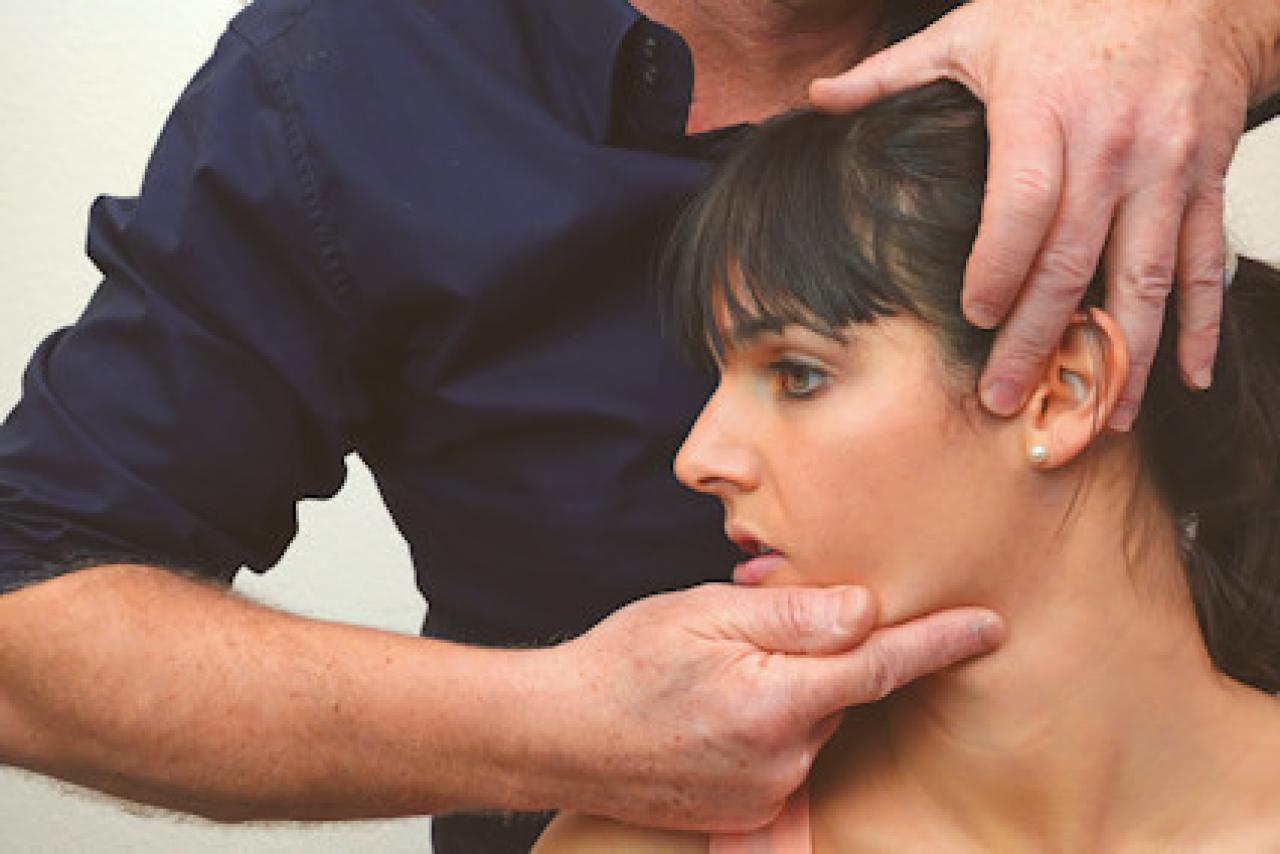
Temporomandibular Dysfunction is a term with different definitions.
1. Introduction
Temporomandibular Dysfunction is a term with different definitions. Often used is the definition from the AAOP which is defined as a group of disorders involving the masticatory muscles, the temporomandibular joint (TMJ) and associated structures (de Leeuw en Klasser, 2008). This means that different factors are influencing the TMD dysfunction such as ongoing nociception in this region, but also contributing factors like parafunctions (e.g. Bracing, Bruxism, biting on the fingernails), stress and (mal) occlusion.
Assessment and treatment of TMD in relation to orofacial dysfunction and pain is complex. The CRAFTA® therapist is educated in a biopsychosocial/multifactorial way and follows the guidelines of the Diagnostic Criteria for Temporomandibular Disorders (DC/TMD) consortium model; Axis 1 and Axis II (Ohrbach et al, 2016). We follow the DC/TMD because of its evidence based approach, and because of its ease in which it can be integrated into the clinical setting as well as into research.
It also makes communication with other specialists such as dentists and orthodontists easier. However not every craniofacial dysfunction and pain patient fits in the DC/TMD. Therefore, actual clinical classifications from a musculoskeletal perspective should be included (see also clinical classification of cranial neuropathic pain).

Address & Mail
Crafta® course / kurs
Search CRAFTA® - Cranio Facial Therapy Academy
We do it for you!